
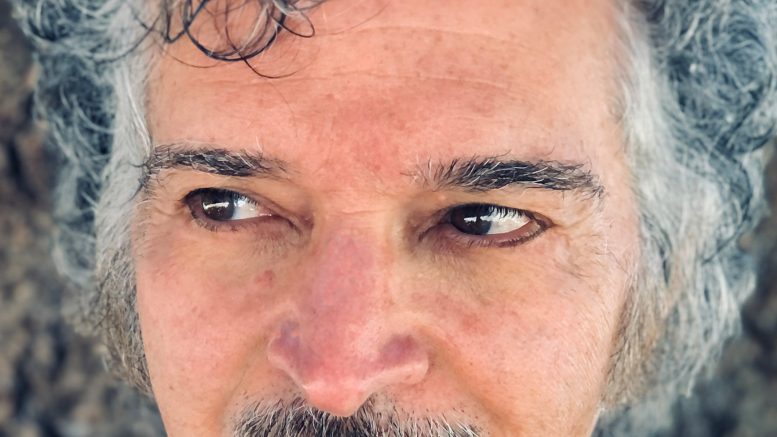
Gino Vannelli will be inducted along with Andy Kim, Jane Siberry and others on Oct. 17.
He recorded his latest album as a tribute to his late wife.
By Nick Krewen
Special to the Star
He will be getting inducted into the Canadian Songwriters Hall of Fame on Oct. 17 at the Meridian Arts Centre in North York, but pop sensation Gino Vannelli would be the first to admit that he struggled mightily a few years into his stardom.
He didn’t experience the usual substance-abuse-and-redemption story arc or writer’s-block narrative. Rather, he grappled with a crisis of confidence that took a spiritual awakening to overcome.
In 1982, a twist of fate kayoed Vannelli’s proposed Twisted Heart album and plunged him into a deep funk.
Up until that point, the Montreal-born singer and songwriter — known for his mass of dark curls, chest-baring shirts and a colossal voice showcased on an eclectic blend of pop and romantic R&B fare — was on something of a hot streak.
He had released a series of Canadian gold- and platinum-selling albums on A&M Records, including Powerful People, Storm at Sunup, The Gist of the Gemini and Brother to Brother,” and had broken big in the U.S. with the Top 25 hit “People Gotta Move” in 1974 and the Top 5 “I Just Wanna Stop,” written by his brother Ross, four years later.
He had just jumped to Arista Records and was sailing with the 1981 smash single “Living Inside Myself” from the album Nightwalker when his career suddenly ground to a halt. Arista president Clive Davis, responsible for signing Janis Joplin, Aerosmith and Billy Joel to their first recording contracts earlier in his career, rejected the album and sold the masters back to Vannelli for US$250,000.
In a previous interview with this writer, Vannelli, who often works with his brothers Joe and Ross, said the album was gathering dust in the attic of his Portland, Oregon home.
Speaking to the Star on Oct. 2, more than two decades later, Vannelli said Twisted Heart would never see the light of day.
“I’m afraid there’s just too much dust on it,” Vannelli, 73, conceded.
He never recorded another album for Arista, but it wasn’t for lack of trying.
“They didn’t like Twisted Heart and I just swallowed that poisoned pill,” he said. “And then my brothers and I thought, ‘OK, we’re going to do something really different.’ We parked all this new equipment in Joe’s spare bedroom, and we started recording (the album) Black Cars.”
Vannelli said he wanted to make a stylistic change to his sound, and was convinced that the songs’ catchy melodies, compelling lyrics and simple arrangements would guarantee North American radio airplay.
He was extremely happy with the result and presented Black Cars to Arista in 1984, figuring that Davis would at least like the song “Hurts to Be in Love.”
“But at that point, they were just adamant. Clive just didn’t want to give me the light of day.” (A request for a response from the 93-year-old Davis went unreturned at time of publication.)
Arista’s loss was Vannelli’s gain: the artist struck a deal with a Paris-based label for European distribution. The album’s title song became a hit overseas in 1984 and created such a buzz in Canada with import sales, it was released domestically and went gold, selling 50,000 copies.
Despite this success, Vannelli said, by the mid-1980s he had lost his creative spark.
How did he regain it? By conducting a life-affirming, deeply religious, soul search.
“It was a bit of a pinball game,” he said. “A ball was bouncing around and it wasn’t going to be direct.”
“In some sense, you have to find God inside yourself. You have to find that thing that wants to create, that wants life — and I couldn’t find it. It had zapped that spirit out of me, so to speak. So, I stepped into the deep end of a long journey, lost at sea. And the journey started by going back to my Catholic and Christian roots.”
Vannelli dove into studying mystic Christianity, Gnosticism and the teachings of German Catholic priest Meister Eckhart — as well as Hasidism, Buddhism, Hinduism, Jainism and Taoism, even trying such experimental therapy as isolation tanks.
But, he said, his eureka moment occurred during a weeklong trip to Peru in 1986, where he had what he has described as “a transcendental or a transpersonal moment.”
“It triggered something in me,” Vannelli explained. “I was inspired by the fact that we all have something inside of us that we have to live up to, or else we’re not happy. It’s as simple as that.
“I found that thing inside of me — that empty hole — and I had to fill it, in a sense, with my own light. But I saw the wound and I healed it. And the only way to heal it was to say, ‘I’m in, again.’”
What Vannelli also discovered was that he had been on the right track with his career up until that point: “It’s just that I was on the wrong track with my own personal thought process.
“I think I had to get a little more gentle on myself,” he added. “While you could push yourself to reach for heights, there’s something that you have to consider about yourself — that no matter what, you feel like an admonished child when you castigate yourself needlessly, or you self-flagellate. So, I had to stop doing and thinking that.”
A few weeks after his epiphany, Vannelli wrote “Wild Horses,” which became a huge Canadian radio hit. He’s since released another 10 studio albums that have explored various genres, among them, 1995’s jazz-inspired Yonder Tree, 2003’s Canto (which features songs in Italian, Spanish, French and English), and The Life I Got (To My Most Beloved) released earlier this year as a tribute to Patricia, his wife of 49 years, whom he lost to cancer in 2024.
In fact, the day we spoke was her birthday.
“She was everything to me,” Vannelli said. “I miss her a crazy amount. In the year and a half since she’s been gone, it’s still difficult.” Until she passed, he added, he hadn’t realized that all the love songs he had written “were all for her.”
Vannelli began as a drummer and a disciple of jazz legends Gene Krupa and Buddy Rich and released his first single, the psychedelic soul track “Gina Bold,” as Vann-Elli in 1970.
Continuing to defy genres and forging new paths, he is currently producing music to accompany a series of graphic novels due for release in 2026, with some of the artwork by his niece and nephew.
“The novels are fictional, inspired by true events,” Vannelli said. “They include still-motion pictures, and I’m writing music to them.”
The other artists to be added to the Canadian Songwriters Hall of Fame this year include Ian Thomas, Jane Siberry, Triumph and Andy Kim. Vannelli, who will be inducted by its founder, publishing executive Frank Davies, said he’s surprised by the honour.
“It’s sort of like your wife throwing a surprise party for you,” he said. “There’s something quaint about it, and something a little shocking, because you’ve just come home from work and you’re not quite groomed.
“I don’t feel quite groomed for this.”